Monday, November 4, 2013

"Pink Collar" Cobaya for a Cause with Chef Daniel Serfer

We mostly do this Cobaya thing to eat well and have fun, but occasionally we try to do good, too. Almost exactly a year ago, we helped Chef Andrew Carmellini fill seats for a Hurricane Sandy Relief Dinner at The Dutch, which was a fantastic meal (with contributions from several Cobaya alumni) and raised more than $17,000 for Sandy relief efforts.


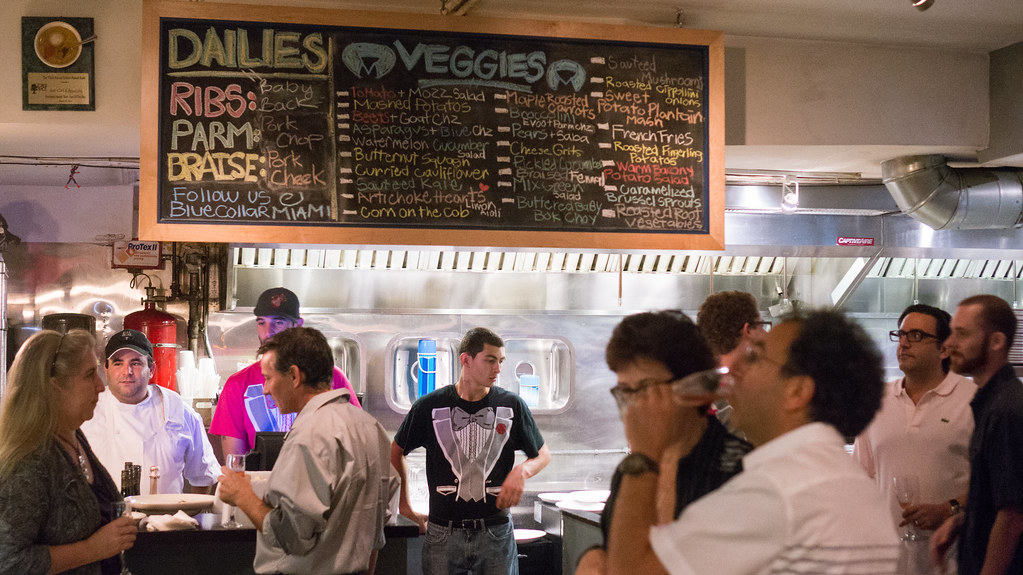
This year, when Chef Daniel Serfer of Blue Collar approached us about doing a charity Cobaya dinner to raise money for Susan G. Komen for the Cure, we were eager to take part. It's a cause that is particularly meaningful to Danny, who lost his mother to breast cancer eleven years ago this month, and he described the menu he put together as takes on some of her favorite dishes.

I'll tell you this: Marsha ate very well. Though Blue Collar is, as the name suggests, a working-class kind of place, Chef Serfer has a fine dining background, having toiled at the now-closed Chef Allen's before opening his own place. And he's already thrown a few "White Collar" dinners at Blue Collar, complete with servers in tuxedo t-shirts. But this was something else. Oysters, caviar, stone crab, lobster, truffles, prime rib, foie gras ... it's a bit of a wonder we don't all have gout. It was indulgent and over the top in the best possible way.


(You can see all my pictures in this "Pink Collar" flickr set.)

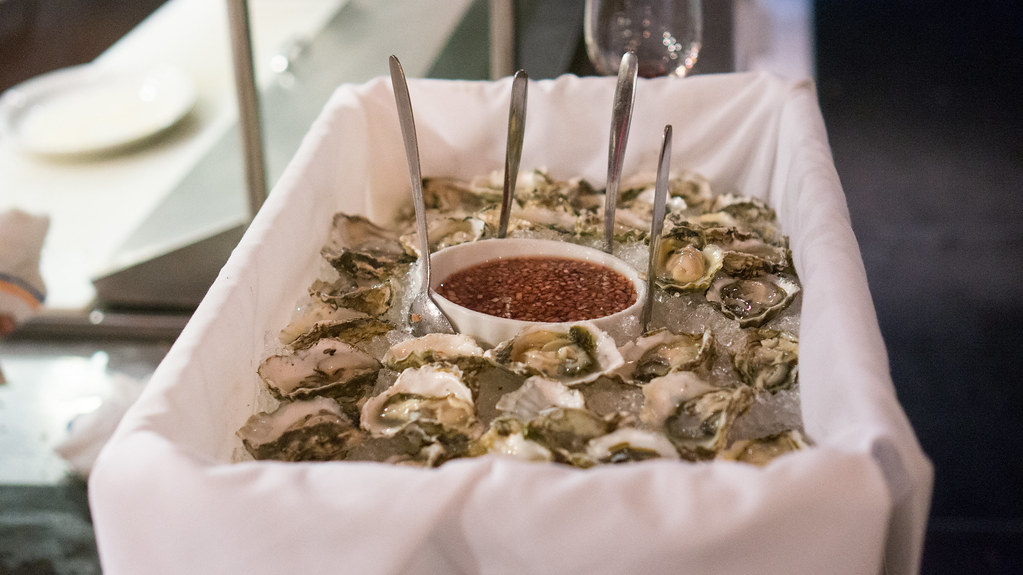
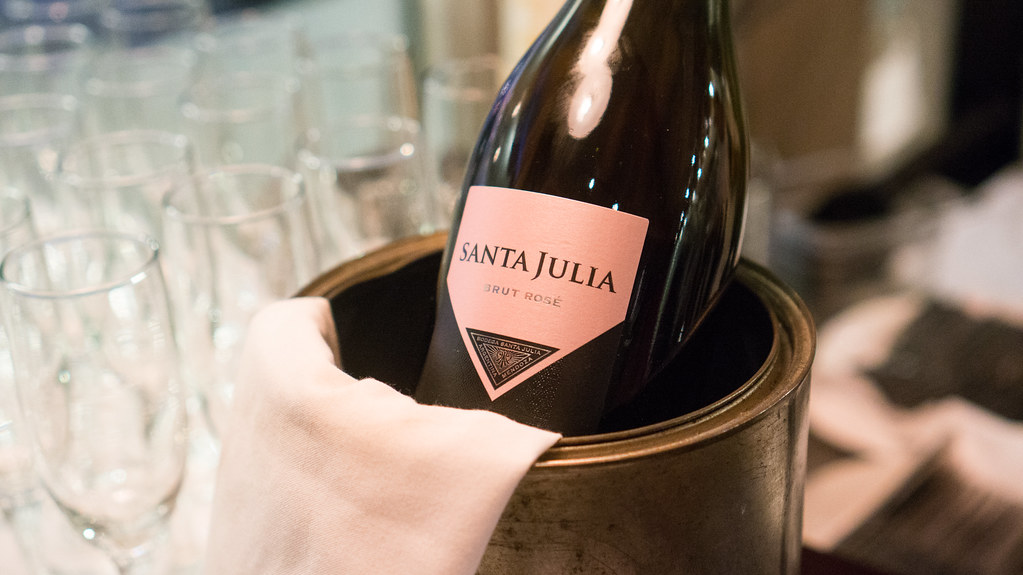
Oysters are a great way to start a great meal, and this one started with a bucket full of freshly shucked Kumamotos accompanied by a traditional mignonette sauce. Bubbly always makes for a nice introduction too - a Santa Julia Brut Rosé from Mendoza Argentina in this instance, selected by one of Miami's best sommeliers, Allegra Angelo, a Cobaya vet who was pouring at her third of our events.


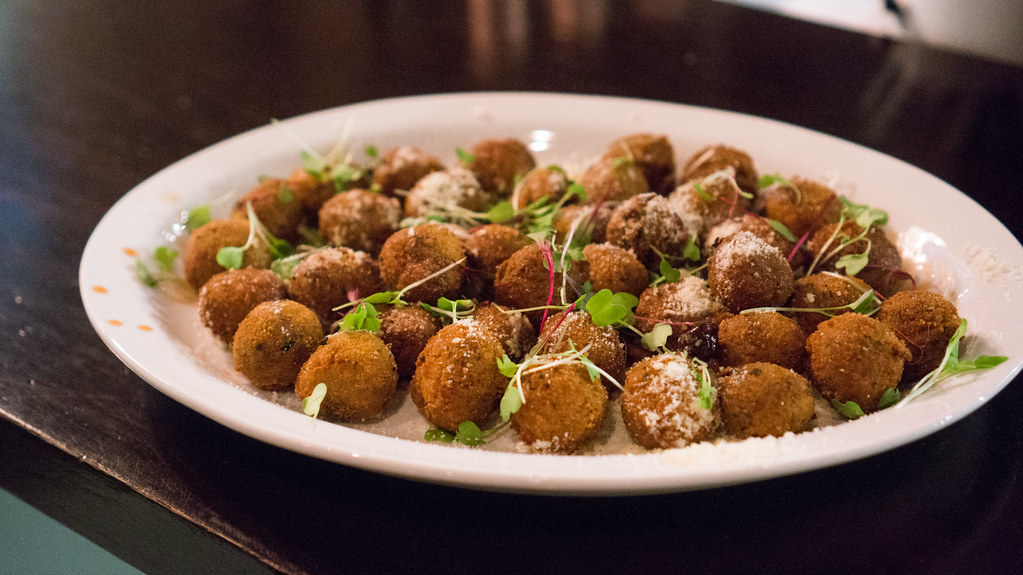
Another pass-around: porcini mushroom croquettes, with a crispy casing, a warm, creamy-textured, earthy-flavored mushroom purée inside, and a light dusting of parmesan cheese.


The first plated course began the sit-down segment of the dinner not so modestly: Kaluga caviar two ways, with scrambled eggs and brioche toast, and also over browned, buttery Yukon Gold blini. It was very nice caviar, and an elegantly simple presentation to let it stand out.

(continued ...)

Tuesday, October 29, 2013

A New Orleans Dining Travelogue (Part 2: New School) - Peche, Root, Coquette, R'evolution, Bar Tonique


In Part 1 of my New Orleans Travelogue, I stuck with the "Old Guard" - traditional places, like Galatoire's, Felix's Oyster Bar, and Mr. B's Bistro, serving mostly traditional dishes. For a long time, it seemed like this was all you could find in New Orleans. New or old, it was as if every place was required by the Napoleonic Code to offer gumbo, shrimp remoulade, étouffée, and blackened redfish. You could tell the more contemporary places because they would affix a sprig of thyme or rosemary like a flag post in the middle of the plate.

That kind of culinary solipsism is sometimes one of the trade-offs of a city with such a passionate food culture. We saw much the same thing on our visits to Spain: the food is mostly outstanding - if you like Spanish food. But nobody talks about the Italian restaurants in Spain. Still, during our more recent visits to New Orleans - post-Katrina - things seems to be changing. The city not only has more restaurants than it did before the hurricane and floods (nearly 500 more, according to Tom Fitzmorris' count at The New Orleans Menu), it seems to be more open to a greater variety of restaurants.

To start exploring what's new, I met up with good friend, talented chef, and Louisiana native Chad Galiano (a/k/a Chadzilla), who returned home this past year after an extended sojourn in South Florida. We had an ambitious plan to hit three spots in the Central Business District for lunch in one day, though sadly ran out of steam after only two (I suspect New Orleans' liberal open container policy - are "go cups" also in the Napoloenic Code? - had something to do with it).

Pêche


Pêche is a new addition to the small stable of restaurants opened by chef Donald Link. After first making a name for himself at Herbsaint, Link returned to his Cajun roots with Cochon, which opened only a couple months after Katrina (and which was one of the best meals of my last visit to New Orleans). Cochon Butcher, a butcher shop and sandwich shop around the corner, followed soon after. As their names suggest, Cochon is largely dedicated to the pig in all its glorious forms, while Pêche revolves around seafood.

So where better to start than with a big seafood platter?


(You can see all my pictures in this Peche flickr set).

Pêche's seafood platter was mostly a compilation of items that can also be ordered a la carte from the raw bar section of the menu. Oysters come from three different sources along the Gulf (on our server's recommendation, I punctuated them with a dash of the house-made habañero and sweet potato hot sauce on the table). Fresh head-on Gulf shrimp are steamed and chilled in their shells, retaining all their sweetness. A mound of smoked tuna salad has the smooth texture of deli tuna, but with a delicate perfume of wood smoke. Tiny crab claws swim in a soft vinaigrette brightened with chili and mint. A seafood salad combines cubes of raw tuna, tender cooked shrimp and fresh avocado.

I fear I will live out the rest of my years vainly trying to recreate the glory of the massive, over-the-top seafood platter we had at Au Pied de Cochon this summer; but on a more modest scale this resonated in all the same ways. There is something incredibly indulgent about having the bounty of the local waters laid out before you like this - fresh, pure, and essentially unadorned.

(continued ... read on for Root, Coquette, Bar Tonique, and Restaurant R'evolution)

Monday, October 21, 2013

A New Orleans Dining Travelogue (Part 1: Old School) - Felix's, Killer Poboys, Galatoire's, Mr. B's Bistro, Napoleon House


It's presumptuous to think you can genuinely understand a city's dining culture after only a few days. In a place with as rich a culinary heritage as New Orleans, it's downright foolish. Over the past few years I've eaten probably about a dozen meals in New Orleans - just about enough to feel like I'm barely scratching the surface of what the city has to offer. To give you a better idea of what I mean, here's my "New Orleans To Do List":


View New Orleans in a larger map

The places I've actually been to are only a small fraction of the pinpoints on that map. (Incidentally, if you find this map useful, I've got a few more of other cities and can look for excuses to post them). So I will try to restrain myself from the big deep thoughts, and instead recount a travelogue of about eight meals, and a few bars, over a recent long weekend in New Orleans:

Felix's Restaurant & Oyster Bar


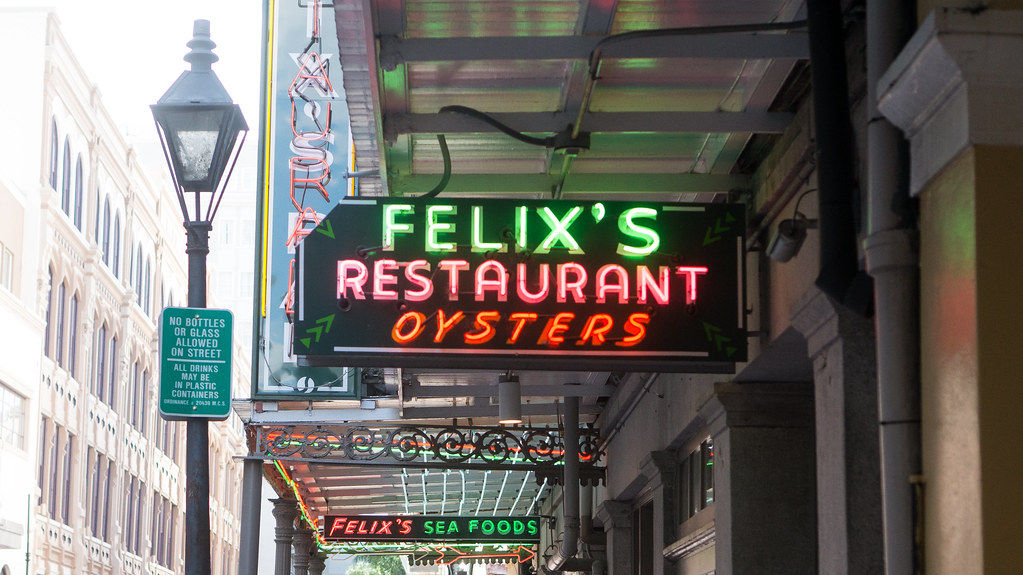
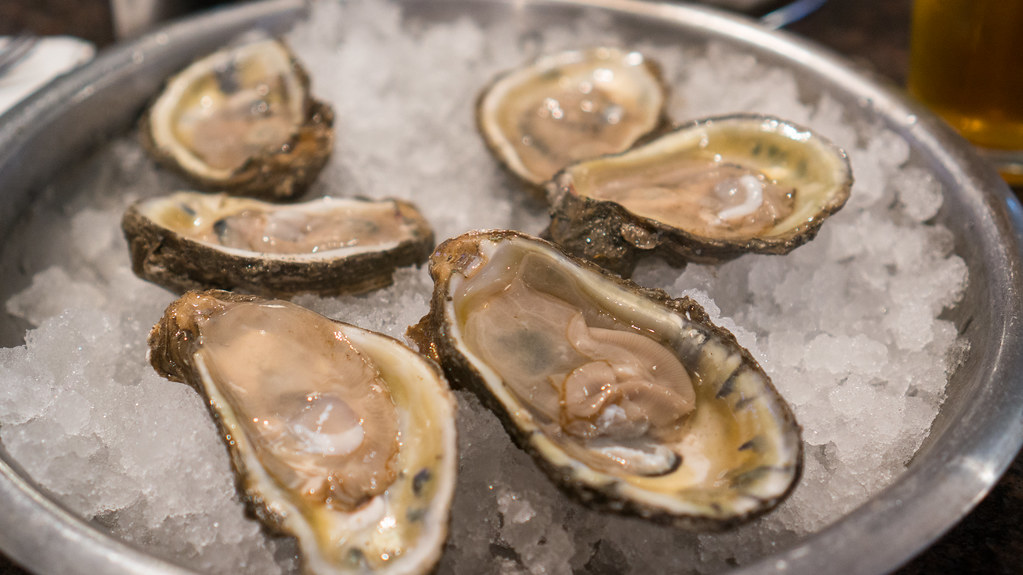
I suspect everyone who visits New Orleans more than a couple times develops certain rituals. One of mine is that I like to ingest some oysters as soon as possible. After dropping my bag at the hotel, I headed straight for Iberville Street in the French Quarter. There's always a line at Acme Oyster House; there's almost never one at Felix's Restaurant & Oyster Bar, directly across the street.[1] I'd be willing to bet at least the price of a dozen oysters that they both get their supply from the same exact place. At Felix's they're available on the half-shell, "char-grilled," or in Rockefeller or Bienville modes; I sampled a half-dozen each of the first two varieties.

(You can see all my pictures from Felix's in this New Orleans flickr set).


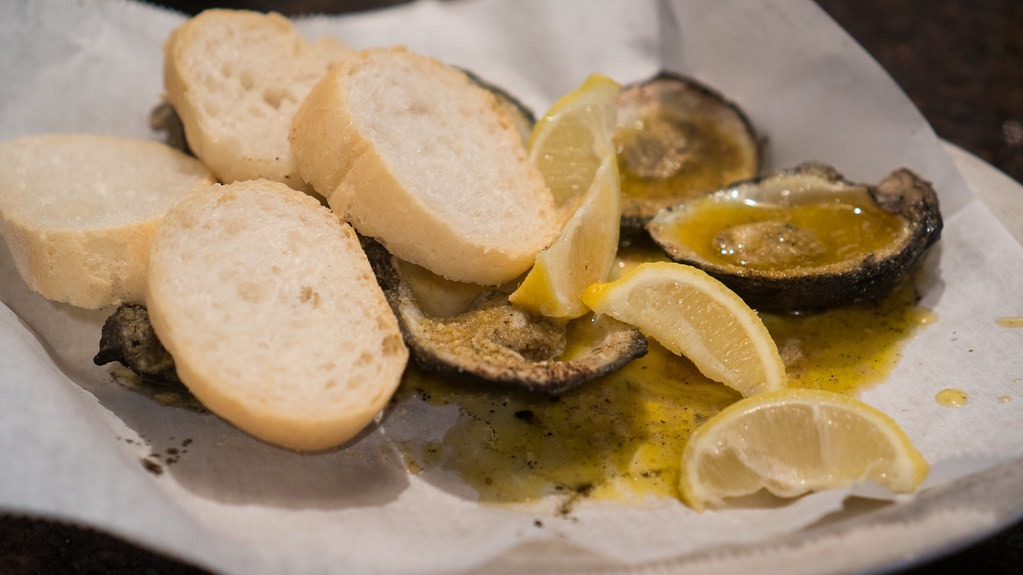
Their Gulf oysters on the half-shell are plump, cold, mild, and more sweet than briny - maybe not the most characterful of oysters I've had, but far from the most offensive too. They go down easy, other than the fact that their bottoms are still caked with mud, making it tricky to sip their liquor from the shell without getting a mouthful of grit. "Char-grilled," meanwhile, means shucked, warmed on the grill and slathered with garlic butter and a sprinkle of parmesan cheese. Like New Orleans style BBQ shrimp, it's all mostly an excuse for dunking bread into that rich, buttery sauce - but I'll happily engage in that charade.

Speaking of rituals, I was slow to pick up on the DIY cocktail sauce program at Felix's. Every spot at the counter and every table is adorned with a still life composition of hot sauce bottles (both Tabasco and Crystal), Worcestershire sauce, and a tin of grated horseradish. An industrial size container of ketchup and little paper cups are positioned at the center of the bar, the idea being that you combine the ketchup and other accouterments according to your own taste to concoct your own personal magical blend (lemons are also available on request). For me, a dash of Crystal is all the oysters needed. As for the lady a few seats down, eating hers directly off the bar counter, with no ice platter, no plate, no nothing: well, everyone's got their own particular style.

Felix's Restaurant & Oyster Bar
739 Iberville Street, New Orleans, Louisiana
504.522.4440

Felix's Restaurant & Oyster Bar on Urbanspoon

(continued ... read on for Killer Poboys, Napoleon House, Galatoire's and Mr. B's Bistro)

Monday, September 30, 2013

Cobaya Tea Party with Chef Antonio Bachour


The first time I sampled pastry chef Antonio Bachour's work was at a Cobaya dinner with Chef Jeremiah Bullfrog a couple years ago. We'd held the event in a warehouse in Little Haiti which, among other challenges, didn't have the greatest air conditioning. It was probably nearly 90° in the dining room and at least ten degrees warmer in the "kitchen." Not exactly ideal conditions, and yet Bachour, with a big fan blowing in a back room, plated some absolutely exquisite desserts, even managing to turn out perfect quenelles of green apple sorbet among about a dozen other elements on the plate.

At the time, Bachour was working at the W South Beach, and the word was that he would be pastry chef at The Dutch when it opened in a few months. Instead, he took his talents to the St. Regis Bal Harbour and the very talented Josh Gripper came to the Dutch - a win-win for Miami diners.

Bachour is an incredible talent. We knew that we'd want to find a way for him to do his own Cobaya event, but the prospect of an all-desserts meal was a bit daunting. And then Mrs. F provided the inspiration: why not do an afternoon tea? It was perfect. We had a weekend afternoon event for a change of pace, with a combination of savory and sweet components, following at least loosely in the format of a traditional tea service.

(You can see all my pictures in this Cobaya Bachour flickr set.)


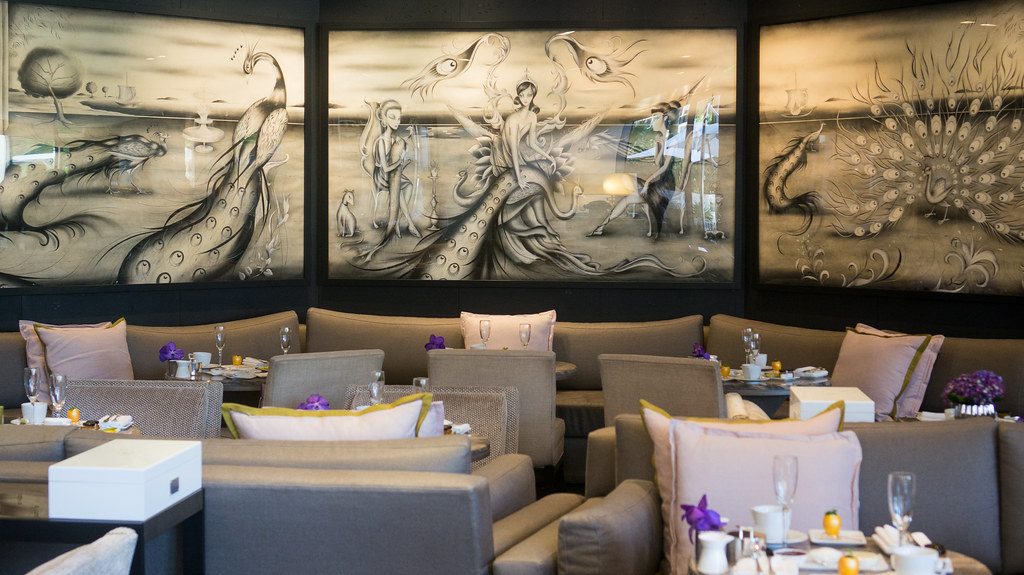
The St. Regis provided a beautiful venue - a lounge area in the resort - and their typical over-the-top service - sabered champagne, free-flowing mimosas, even some live music. And Bachour, with a savory assist from hotel chef Tom Parlo, provided an equally over-the-top menu.


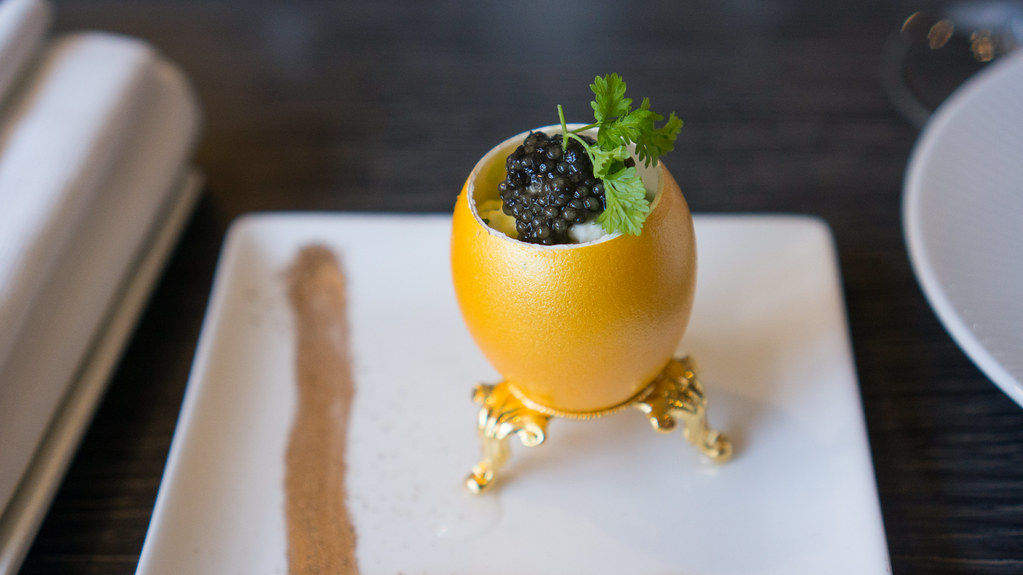
To start, a golden egg, filled with a couple more kinds of eggs: a creamy egg salad, laid over a puddle of cucumber gelee, topped with a generous dollop of caviar. This was a delicious, indulgent few bites, fully worthy of its ornate presentation.


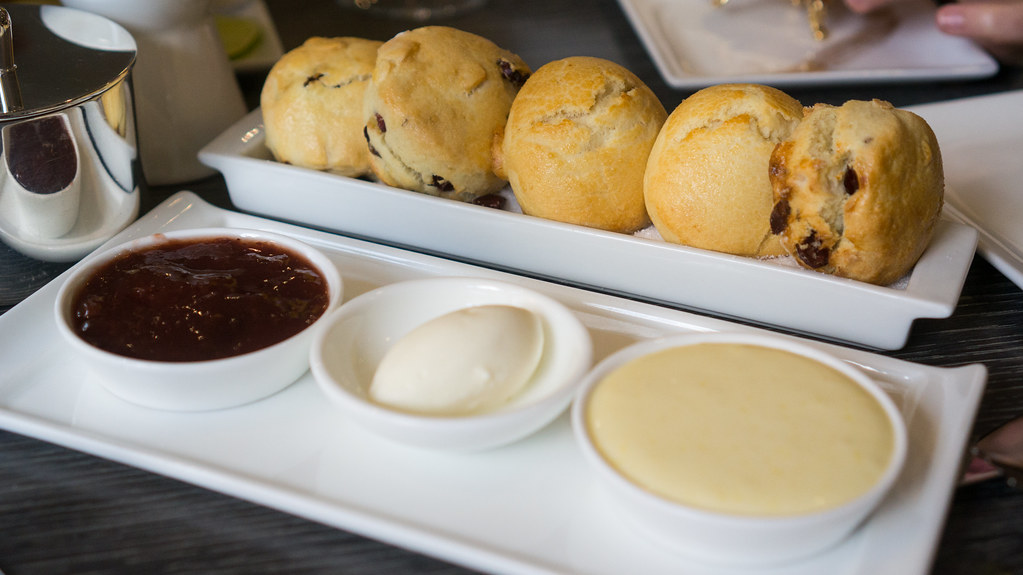
Next, a round of tender scones with berry jam, citrus curd and clotted cream - very classical.


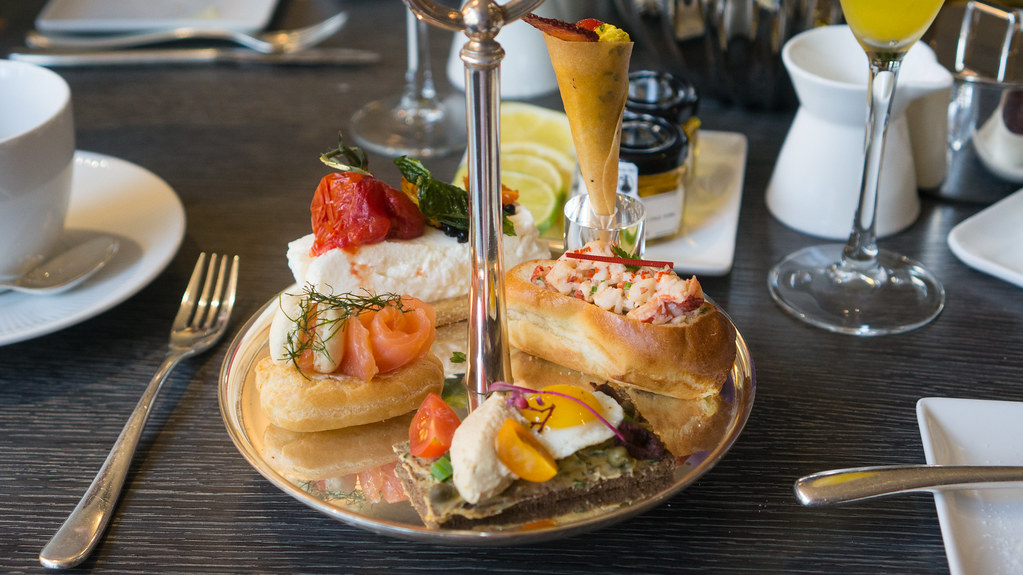
A platter of savory tea sandwiches was classical in format, but modernized in the execution. It included a hearty smorrebrod with a miniature composed nicoise salad (tuna, cherry tomatoes, green beans, olives and a quail egg); a savory eclair filled with cream cheese and topped with a ribbon of smoked salmon and a salmon macaron; a burrata salad assembled over shortbread with dried tomatoes, basil and balsamic caviar; a perfect mini lobster roll tucked into a brioche bun; and a cornet filled with curried chicken salad, topped with a crisp dried strawberry.


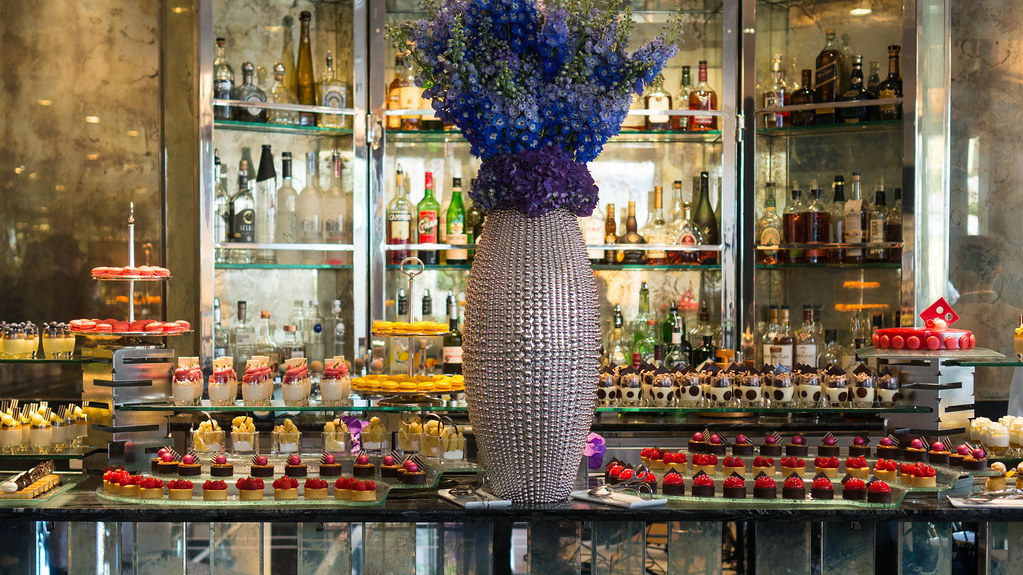
Then it was time for a rather unbridled dessert presentation - probably more than 20 different sweet compositions assembled by Chef Bachour, on a buffet that seemed to go on forever and was replenished as rapidly as it was depleted. I don't think I managed to get pictures and descriptions of everything, much less sample them all, but here's a faithful attempt:

(continued ...)

Friday, September 6, 2013

Blanca - Brooklyn, New York

"People take pictures of each other
Just to prove that they really existed."
A couple years ago, reports began to emanate of a second kitchen at Roberta's, a funky "third wave" pizzeria in deep Brooklyn. Roberta's chef Carlo Mirarchi was already turning out acclaimed pizzas. But this was something else - delicate fish crudos and composed dishes, "fantastical tales of aged birds and beef." Soon the mainstream media caught up, and word was out on these extremely limited edition tasting menus.

Demand ultimately led to a separate venue inside the Roberta's compound for these dinners, dubbed Blanca. Since opening about a year ago, Blanca has become known for a number of things: its artful, extensive, and expensive (currently $195pp) tasting menus; its extreme dry-aged meats program (not "fantastical" after all); its location in Bushwick (Roberta's is on a "grim street" in "basically a frontier community," according to Alan Richman, though Ruth Reichl didn't find it nearly so desolate recently); its extremely limited seating (12 spots, two seatings a night); its obtuse reservation "system" (since fixed);[1] and its no-photos no-cellphones policy.

Some of these are more important to me than others. I'll travel pretty far - even Bushwick[2] - and navigate a pretty tricky reservation system if there's something great to eat at the end of the ordeal. And as someone who started off this blogging venture with very ambivalent feelings about photography, I never really imagined that not being able to take pictures would have any impact on my enjoyment of a meal.

And yet I find myself now with ambivalent feelings about our meal a few months ago at Blanca, and I wonder if the no-photos policy has anything to do with it. I have vivid recollections of only a handful of the 20-ish courses we were served. Many others are only fuzzy vague memories; and some I don't recall at all.

Do people take pictures of their food just to prove that it existed? Does a dish no longer exist to me if I don't have a picture of it? Have I so externalized my own brain functions that I can no longer clearly remember something if I've not digitally recorded it somewhere? Or was it something else about the Blanca dining experience?

Here's what I do recall:

(continued ...)

Sunday, August 25, 2013

gastroLab Dinner with Chef Jeremiah

There's a difference between "clever" and "smart."[1] Clever may make you giggle. Smart makes you think. The difference is sometimes overlooked in what was called "molecular gastronomy" five years ago, then was redubbed "modernist cuisine" a couple years back, and now, according to ponderous dipshit shnorrer John Mariani, is already passé. Some of the criticism is fair: in manipulating form and texture, and disregarding flavor, some chefs were more clever than smart. Just because you can do something doesn't mean you should do something - in particular, it doesn't mean it tastes better.


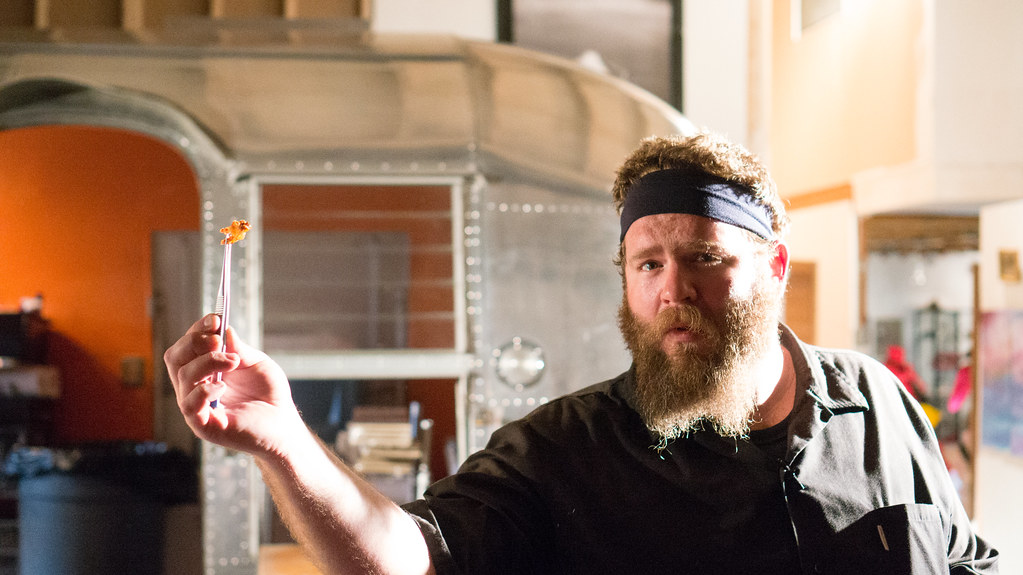
Going back to one of our first Cobaya events, I've enjoyed several dinners with Chef Jeremiah Bullfrog (perhaps better known as the pilot of the gastroPod food truck) over the years. His latest "gastroLab" dinner was the smartest meal I've had with him - one where everything on the plate had purpose and focus, one where the thought behind each item translated into flavor.

(You can see all my pictures from this meal in this gastroLab flickr set).


The site for the dinner was the new location of GAB Studio Art Gallery in Wynwood, and Jeremiah pulled the gastroPod right inside to serve as the kitchen.


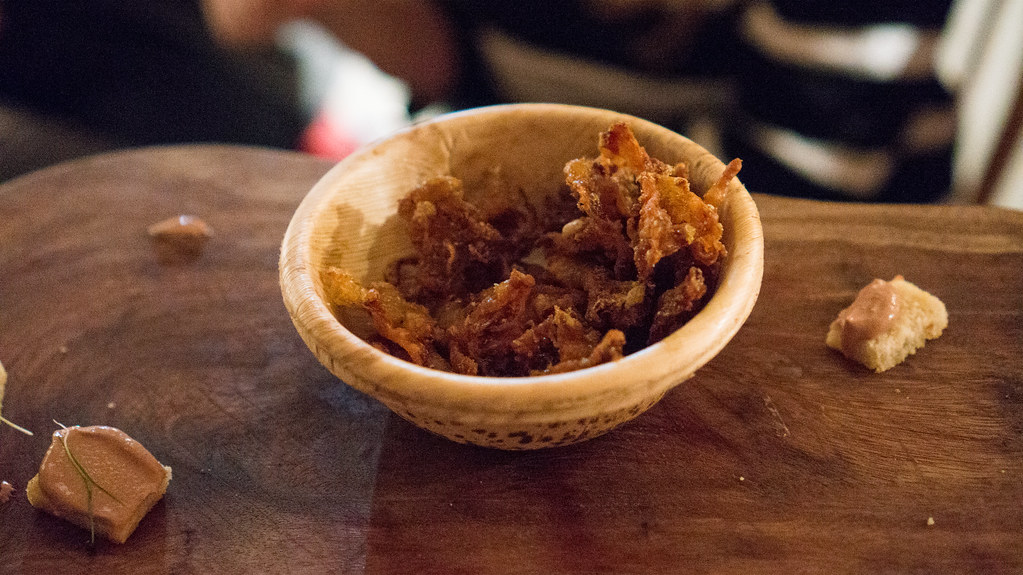
The meal started with a procession of snacks, served communally on a big wooden plank. Crispy chicken foot chicharrones used the skin from deboned chicken feet - someone must have doing a lot of chicken toenail trimming. Toast squares were topped with a creamy, rich duck liver mousse. And morcilla and eggs - something of a recurring theme with Chef Jeremiah - came with the blood sausage in two forms - in puffy, chicharrone-like morcilla-tapioca crisps, and more traditionally in the meaty, creamy, loose sausage that filled them, dabbed with a rich egg yolk jam.


Borscht has always seemed like something of an oxymoron to me - a cold, refreshing soup, but also a hearty meat stew. Jeremiah's "Watermelon Borscht" played off both those angles but focused mostly on the former. Cubed watermelon was compressed with beet juice to yield a cool, juicy bite with an undertone of the earthy root vegetable, as well as a stunning ruby hue. Meanwhile a ribbon of whipped bone marrow and a "rare beef jus" (rare because the beef was cooked sous vide to keep its color) dropped the meaty bass note onto the plate, with strands of pickled cabbage and dehydrated beet "streusel tied into the theme too. A multitude of textures instead of a simple puréed soup, but with the same happy interplay of flavors. (More complete explanations of several dishes are on Jeremiah's blog - the watermelon borscht is here).


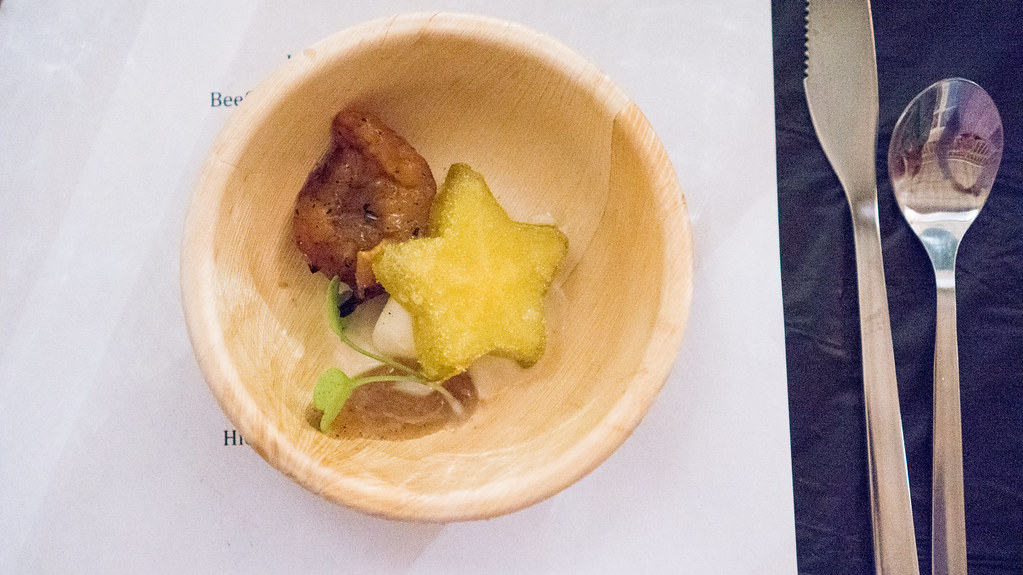
Next, the South meets the Tropics with fried green carambola. We've all heard of fried green tomatoes. Well, unlike the rest of the country, summer isn't tomato season in South Florida. But we do still get carambola a/k/a starfruit, and often they're less than perfectly ripe.[2] So Jeremiah took the unripe carambola and treated it like a green tomato - compressed them with ricotta whey, coated them with semolina and fried them, yielding a similar texture and tartness to the classic southern staple. This was paired with house-made goat's milk ricotta (wherefrom the ricotta whey), Georgia peaches pickled in rice wine vinegar and then charred, and a radish green for a little zing. Entirely unexpected - entirely successful, the kind of dish that sounds unlikely until you taste it.

(continued ...)

Thursday, August 1, 2013

Spiceonomics - Navigating Miami Spice, 2013 Edition


With August upon us, it's that time once again: Miami Spice. Now in its twelfth year, Miami Spice remains something of a culinary version of Russian Roulette: you might have a very good meal that's a great value at a restaurant that's excited to offer it to you; or you might have a mediocre meal that's not very different from the restaurant's regular prices, served by a resentful and begrudging waitstaff who are not impressed by your 15% tip on a $33 per person tab.

How to tell the difference? Over the years I've repeatedly proposed and refined three basic rules by which to approach Miami Spice:

(1) there's no reason to bother with restaurants where the Spice menu is not a meaningful discount from their regular prices (though, by all means, go to them if you like them; just don't do so because they're offering a Miami Spice menu);

(2) the infamous chicken breast / farmed salmon / churrasco (or substitute short rib) "trifecta" is usually a tell that a restaurant doesn't have its heart in it; and

(3) look for food that actually interests you. If a restaurant doesn't excite you the other ten months of the year, it is unlikely there's going to be something really inspiring on their Spice menu.

To those three basic rules I would add a couple corollaries:

(a) Tip on the value of the meal, not the price. If you're dining at a place where the Spice menu is a meaningful discount from their usual going rate - i.e., if your $33 meal would normally cost $50 - be a sport and drop a $10 tip. The servers are working just as hard as ever.

(b) There's no rule that everyone at the table has to order the Spice menu. (Well, except at some places like Pubbelly where they assume everyone is sharing and offer multiple small plates) Consider it an opportunity to do a little splurging and dollar-cost averaging at the same time, so you can eat at a high-end place without completely breaking the bank.

Last year, rather than just say "Here are 10 places to go for Miami Spice," I plotted out a "Week of Spice" - seven actual lunches and dinners that I'd want to eat from the universe of Miami Spice menus. Even though I didn't actually eat all those meals, I still like the format, and will do it again here. Once again, these are not the complete menus of any of the places listed, only the things I thought sounded most interesting. And once again, I've not actually tried any of these menus yet, so caveat emptor, etc. (though for the most part these are restaurants I know and would generally trust).

(continued ...)

Monday, July 29, 2013

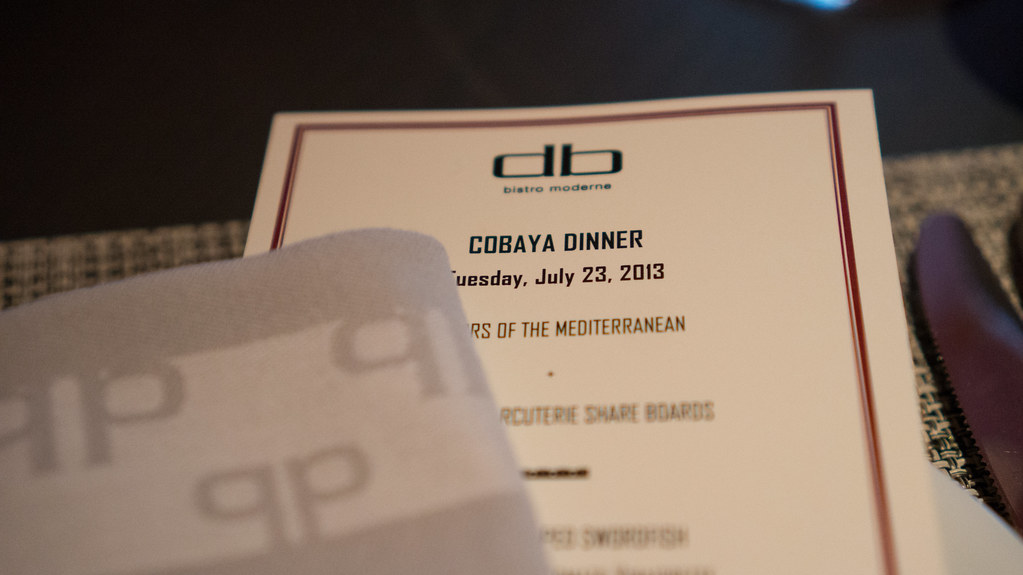
DB Cobaya Moderne

Some of our Cobaya events come together on the fly: a chef says they want to do one, we find a spot, and before you know it, dinner is served. Others require more legwork. Our recent dinner at DB Bistro Moderne in downtown Miami fell into the latter category, with Chowfather in particular working for months to make it happen. The reality is, Daniel Boulud is not just a chef - he's a brand - and DB Bistro is not just a restaurant - it's an outpost of a culinary empire, with fourteen venues spread out among eight different cities in five countries.


It's a little different from our usual modus operandi, but it was also a chance to do a dinner at what I regard as one of Miami's top restaurants. Other than maybe Michelle Bernstein at Michy's, or Kevin Cory at Naoe (really a different beast entirely), I don't think there's another kitchen in town that executes with such consistent precision. So we pushed forward, as I knew it would be a good meal, and wanted to see what executive chef Matthieu Godard (who took over the helm for Jarrod Verbiak about a year ago) would do given the Cobaya format (which is really nothing more than "cook whatever you want that gets you really excited and that you don't regularly get to do").

(You can see all my pictures in this DB Cobaya Moderne flickr set.)


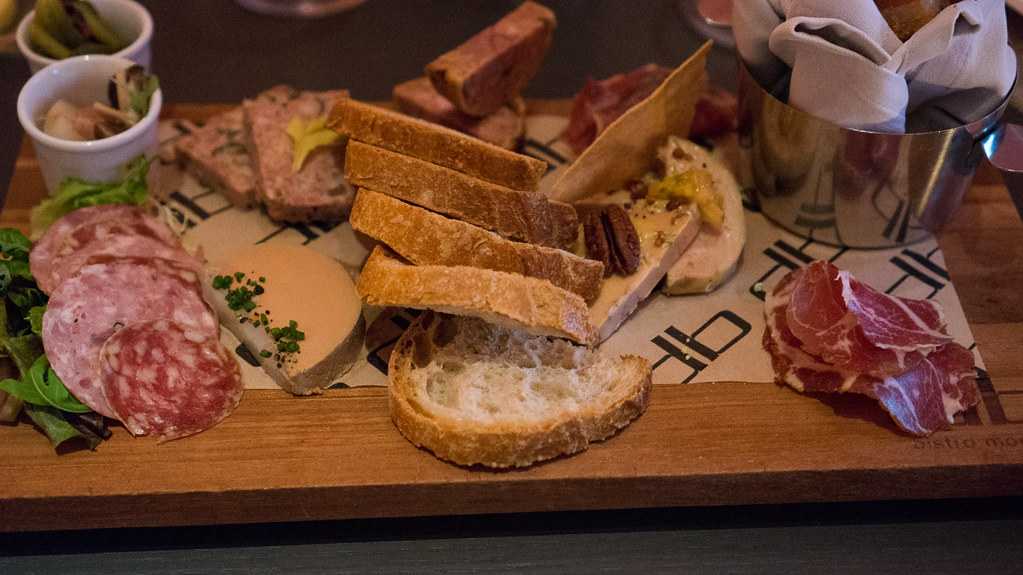
I've said before that I think DB's charcuterie is the best that can be found in Miami - and, indeed, some of the best I've had anywhere. So I was happy to see the dinner start with a board of it: a couple different salumi, a few different pâtés, ruby-hued slices of cured ham, a half-moon of lush, silky foie grass mousse, an assortment of pickled cornichons and onions, and maybe the showstopper of the platter, crackling-crisp nuggets of pork rillons, like croutons of pure pork belly.


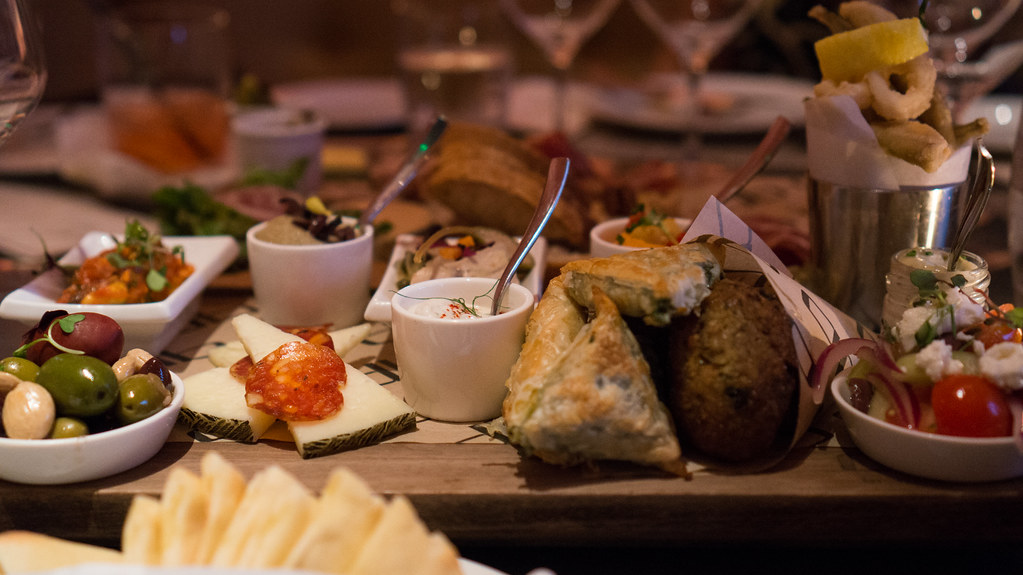
Soon another platter landed on the table, described as "Flavors of the Mediterranean." It was loaded with spanikopita, lamb kibbe, mussels in a spicy tomato sauce, mackerel escabeche, slices of chorizo and manchego cheese, a little "fritto misto" of smelts and calamari, marinated olives and marcona almonds, and ramekins of roasted eggplant baba ghanoush, red pepper hummus and tzatziki.

Aside from offering such a copious selection of treats, the communal presentation of these first courses on the boards was a nice ice-breaker. We always have a mix of newcomers and veteran guinea pigs at these dinners, and this was a good way to get strangers passing dishes around - and eventually, prompt some good-natured fighting over the last spanikopita.

(continued ...)

Monday, July 8, 2013

The Dutch - Miami Beach

I'll confess, I didn't really understand The Dutch at first. Here was a French-trained chef with an Italian-sounding last name, with a menu that seemed like a hodge-podge of American comfort foods, but with things like kimchi and jerk chicken making random appearances  - and it was called "The Dutch"?[1]


Andrew Carmellini is a protege of Daniel Boulud whose first big gig was as chef de cuisine at New York's Café Boulud. When he went out on his own, he made a name for himself with Italian restaurants, first A Voce and then Locanda Verde. But when he opened the Dutch in Soho in 2011, it was something different: oyster platters, steaks and chops shared space with smoked white fish chowder, rabbit pot pie and "barrio tripe." And when he brought a second iteration of the Dutch to Miami the next year, in the W Hotel South Beach, it had the same kind of eclectic mix, but with a South Florida twist - think ceviches of local fish and salted lime pie.

After getting Carmellini's cookbook, "American Flavor," it started to make some more sense. From Southern style biscuits to pozole inspired by Puebla-born dishwashers to steak with the flavors of Flushing's Korean BBQ joints, the book is an extended love note to "American" food in all its traditional and modern polyglot guises. It is one that Carmellini seems simultaneously overqualified and underqualified to write - you might just as easily ask "Why is a chef who worked with Gray Kunz, Alain Passard, and Daniel Boulud wasting his time making fried chicken?" as "What does that fancy-pants chef possibly know about fried chicken?"

The answer perhaps lies in something Albert Adrià was recently quoted as saying: "There are only two kinds of cuisine. Good and bad." Carmellini? He makes the good kind.

After going there many times over the past year and a half since it opened, the Dutch strikes me as a sort of restaurant incarnation of "American Flavor." You can dine much as you might have a hundred years ago, getting a dozen freshly shucked oysters and a dry-aged, bone-in steak. Or you can get yellowtail crudo with spicy watermelon, followed by a pork chop "al pastor." Either way, you'll eat well.

(You can see all my pictures in this The Dutch flickr set).


There is no better way to start a meal at the Dutch than with the "Little Oyster Sandwiches" that head up the "Snacks." The oysters are rolled in cornmeal with a dash of cayenne and pimentón, fried just enough to crisp the exterior without hammering them, then tucked into a soft sesame seed flecked brioche bun that's been smeared with a pickled okra tartar sauce, a sheet of iceberg lettuce providing some delicate cool crunch. It is a perfectly designed and crafted bite, showing a lot of attention paid to a small package.

(continued ...)

Sunday, June 2, 2013

Turns of Phrase - June 2, 2013

Another small measure of appreciation for the work of that increasingly rare creature: the gainfully employed, artfully perceptive food critic:
"The art of the possible is on display."
- Phil Vettel on Next (Vegan) in Chicago Tribune
"But when you pull your car into the parking lot of Lucy’s 24-hour laundromat/wateria, and you make your way up to the truck, you will find that the woman behind the counter is slightly unclear on the concept of tlayudas, but rather firm on the unavailability of carnitas, which sold out almost before it turned dark. You can leave, or you can settle for tacos made with trompas, which is to say a kind of carnitas made with the pig’s snout. You take a step back toward your car. But then you notice that the tacos are made not just with fresh tortillas but with tortillas made to order from little balls of fresh masa, and that the red-chile salsa seems to be hot enough to flush the neck of the tattooed dude who was a couple of places ahead of you in line."
- Jonathan Gold on La Tehuana in L.A. Times
"At first this prim choreography seems tongue-in-cheek, then earnest, and finally almost silly — and all the more charming for it, like much of the orchestrated seduction that is a night at Maison Premiere."
- Ligaya Mishan on Maison Premiere in New York Times
"The food is impressionistic, best appreciated as a series of lovely, fleeting moments rather than the sustained arc that typically constitutes a meal."
- Ligaya Mishan again

(continued ...)

Friday, May 31, 2013

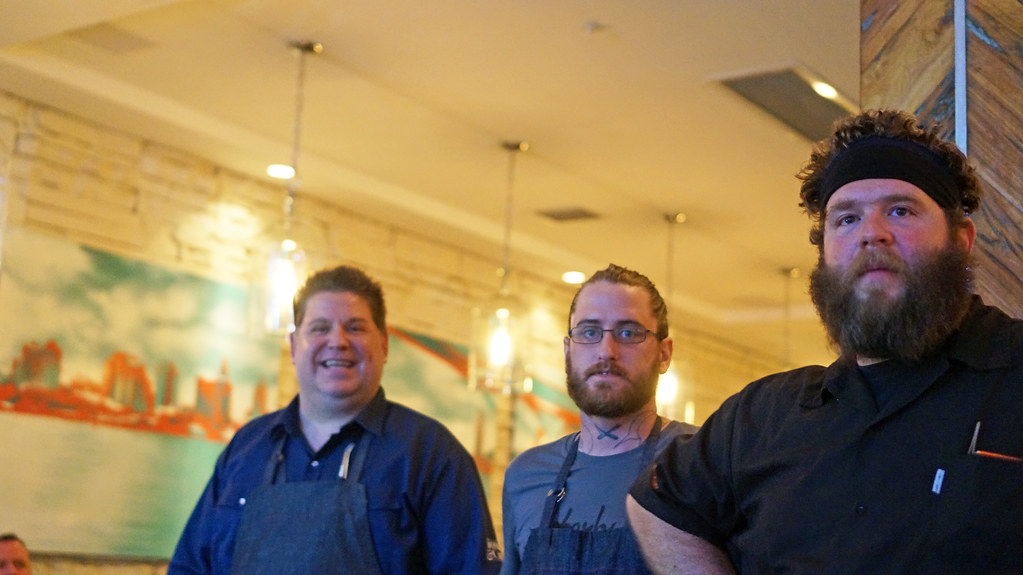
Tongue & Crux - Chefs Brandon Baltzley, Jamie DeRosa and Jeremiah Bullfrog

The last time Brandon Baltzley - chef, authorfarmer - came to town, it was a bit like Planes, Trains and Automobiles meets Supermarket Sweep. As Brandon had one travel mishap after another, I was racing through the grocery store filling carts from the shopping list he texted me so that there would be something to cook when he finally arrived for our Cobaya dinner. But as I said then, Brandon seems to thrive amid chaos, and it all turned out just fine.


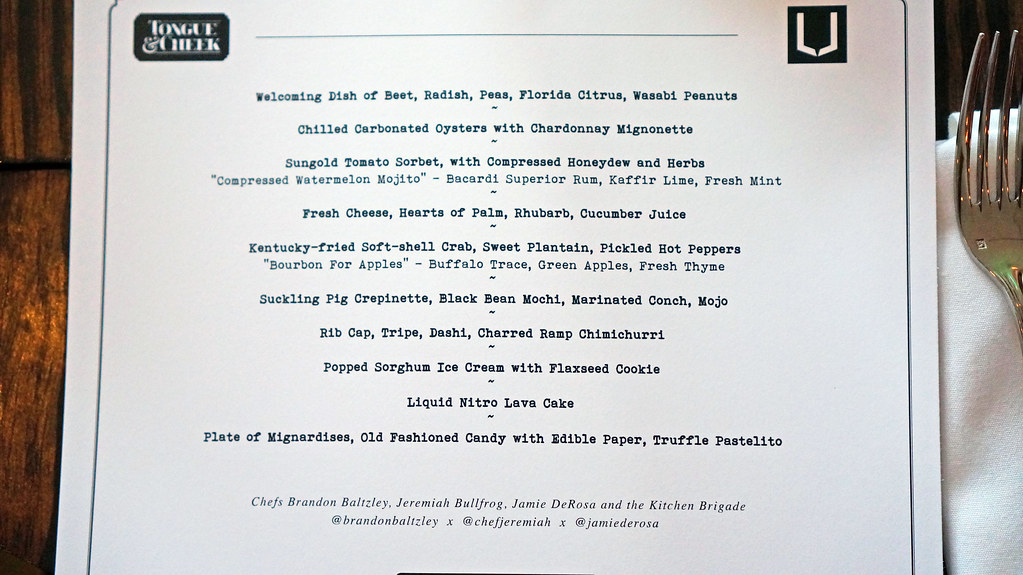
This more recent Miami journey was not without its adventures, but Brandon got into town - a couple days early, even - and I didn't even have to do any shopping. The purpose of this visit was to collaborate on a brunch with the gastroPod's Jeremiah Bullfrog (which I sadly missed), and a dinner at the recently opened Tongue & Cheek in South Beach with T&C's chef, Jamie DeRosa, and Jeremiah. After several days of exchanging ingredient lists and dish ideas, here is what they came up with:

(You can see all my pictures in the Crux @ Tongue & Cheek flickr set)


And here is how it came out:


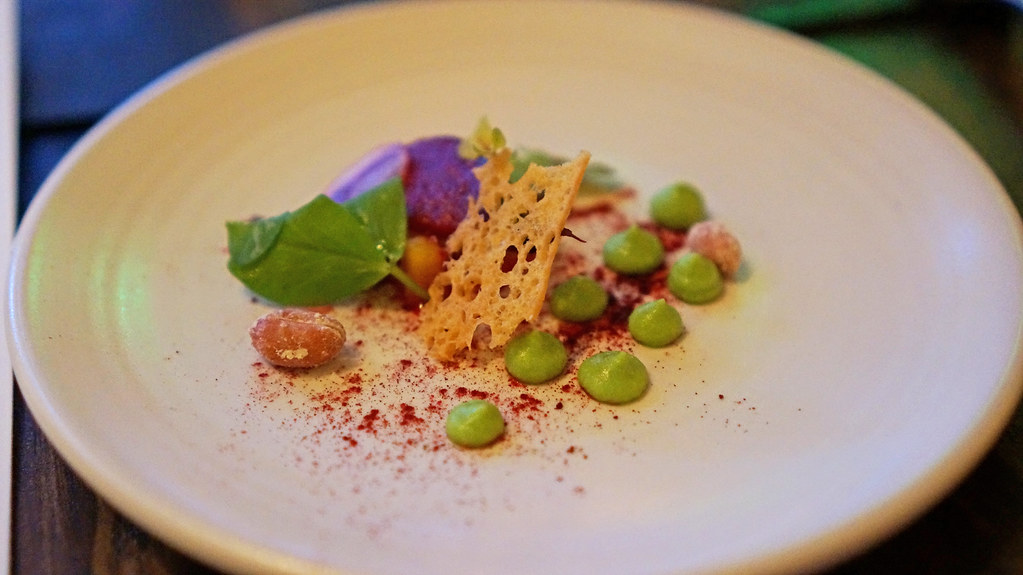
As an amuse bouche to start things off, a delicate composition of beets (in both lightly pickled and powdered forms), slivered radishes, dots of pea purée, wasabi peanuts, and a thin, airy, crispy sheet of toast. I was mystified by a flavor I could taste but couldn't find anywhere on the plate - something light, bright and intensely aromatic. After the dinner, Brad Kilgore (who was helping out in the kitchen, and who you can currently find doing a Tuesday night BBQ pop-up at Josh's Deli) gave away the secret: T&C pastry chef Ricardo Torres gave the plates a haze of orange oil from a squeezed peel (like a twist for a cocktail) right before service. It was a great touch.


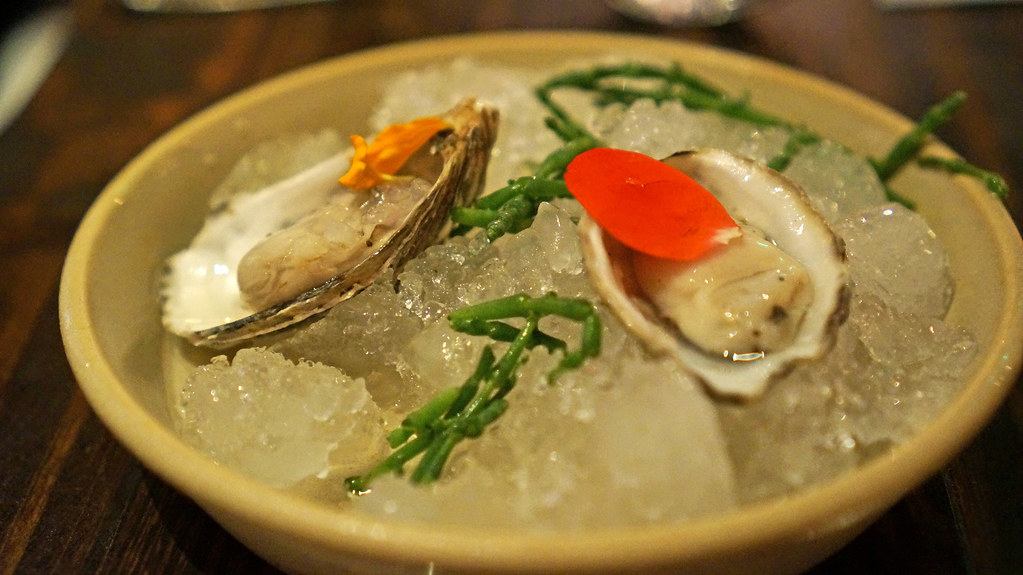
I did not detect the carbonation in these "chilled, carbonated" oysters, but they were still very good regardless - plump and sweet, lacquered with a well-balanced chardonnay mignonette and topped with nasturtium petals, with some sea beans (a/k/a salicornia) alongside. Even Mrs. F, who is usually not much of an oyster fan, was a fan of these.

(continued ...)

Sunday, May 26, 2013

Turns of Phrase - May 26, 2013

Following up on something I started doing last week - some of my favorite passages from the past week's food writing:
"But some tricks, like the disappearance of a marble up someone's nose, can be more curious than delightful."
- Tejal Rao (recently resigned food critic at the Village Voice, following in the wake of Robert Seitsema who was let go last week), on the culinary sleight of hand at Alder.
"Just as you’re pondering how to say “opportunist” in Italian, the food arrives, and it’s great."
- Jeff Ruby on Café Spiaggia in Chicago Magazine.
"It isn’t pretty, this murky brown salad. Take a look at those splinters of green papaya, gnarly rings of fried shallots and clots of air-dried beef. It could be a box of matches spilled in dishwater—certainly too homely for the pages of any respectable food magazine. But we’re evolved eaters here in New York City, too sophisticated to deny ugly things their fair shake. Taste it and understand the moral of a thousand children’s parables about inner beauty: This funky, crunchy bombshell of compulsive flavor might be the most interesting salad in Kings County."
- Jordana Rothman on Nightingale 9 in Time Out New York
"The waiter bends low, in his burgundy tuxedo. “Let’s talk about the process,” he says. He refers to the fruits of the kitchen as though they are his. (“All my veal tonight.”) The delays he does not own: “We are working on the drinks.”"
- Nick Paumgarten on Carbone in the New Yorker

(continued ...)

Tuesday, May 21, 2013

Ten Great Things to Eat in Maui

While starting to mull over potential destinations for the upcoming summer, it occurred to me that I never really reported back on last summer's trip to Hawaii. Though this was not a trip centered around dining, we do always look to eat well, and it was actually just a bit of a challenge in Hawaii. Not for lack of good food; but as someone who lives in Miami Beach, I know from experience that when you're in an overwhelmingly tourist-driven destination, it can be tough not to eat like a tourist.


Honolulu seems to be the epicenter of interesting dining in the Hawaiian islands - crazily ambitious projects like Vintage Cave, refined tasting menus like Chef Mavro, pop-ups like The Pig and the Lady. That's not a surprise, given that it's the most populated city. But for non-culinary reasons, we elected to skip Oahu entirely in favor of Maui and Big Island.

The good news was that locavorism seems to run strong on all the islands. It ought to: Hawaii has ready access to a fantastic variety of fresh fish straight from the ocean, as well as great locally grown fruits and vegetables. And over the past couple decades, there's been an increasingly concerted push to incorporate those ingredients into the restaurant repertoire, instead of relying on flown-in products.

Still, there's a huge gulf between the resort restaurants catering to the "haole" (foreigners), and the local joints with their loco moco and spam musubi (which we ate, and which was good, but there's only so much of that my Crestor can handle), and it's not always so easy to find the middle. But that's what we were looking for; here's what we found:


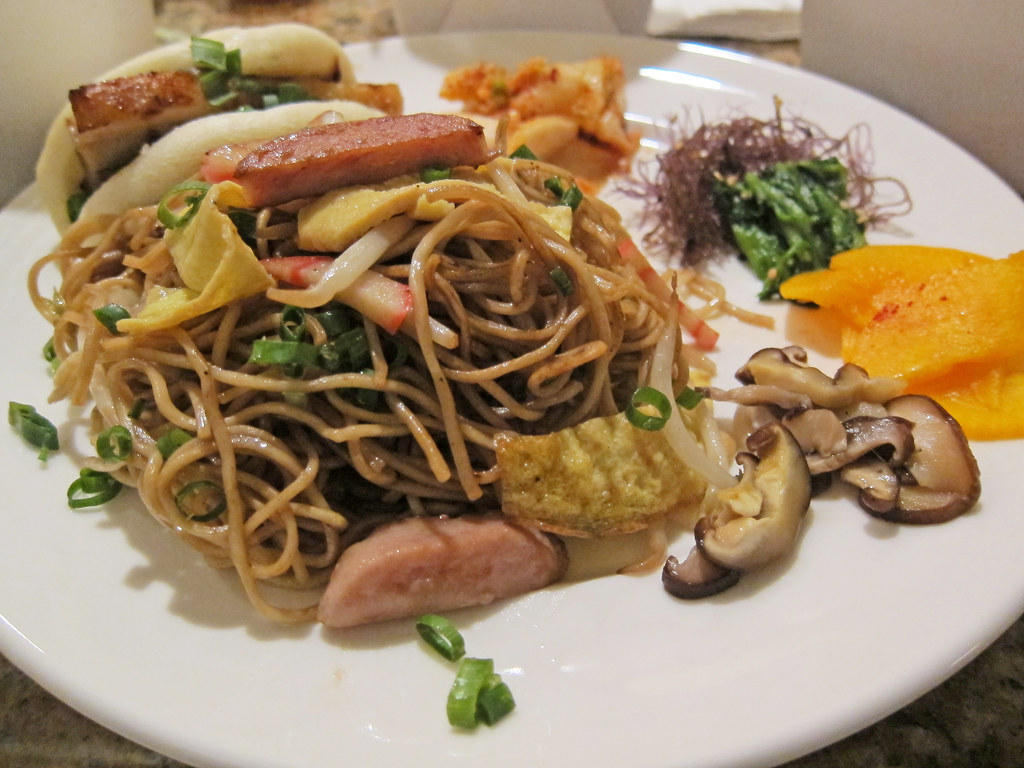
1. Fried Saimin at Star Noodle (Lahaina). Star Noodle was exactly the kind of place we were seeking out. Located in a business park well off the main drag, it felt more like a locals' hangout than a tourist trap. The menu, from Chef Sheldon Simeon (yes, the guy who was always wearing the "Where's Waldo?" hat on last season's Top Chef, and who also was a 2011 James Beard semi-finalist for Rising Star Chef and Best New Restaurant) was a happy hodge-podge of pan-Asian noodle dishes and other items, done with some contemporary flair.

From what I've read, saimin is arguably the "national dish of Hawaii" - ramen-style wheat noodles, either in a broth or pan-fried, often coupled with that other Hawaiian staple, Spam, as the main protein. Star Noodle's Fried Saimin hewed pretty close to tradition, the chewy noodles tossed with slices of Spam and kamoboko (fish cake), thin ribbons of cooked egg, bean sprouts and green onions. They were the best of the noodle dishes we tried there.[1] An assortment of pickled vegetables, seaweed salad, kimchi, and Momofuku-style pork buns rounded out the meal.

Star Noodle
286 Kupuohi St., Lahaina Maui
808.667.5400

Star Noodle on Urbanspoon


2. Ahi Poke Shoyu at Safeway (Lahaina). Safeway? Really? Yes. As unlikely as it sounds, a Chowhound thread tipped me off that the Safeway in downtown Lahaina has a remarkably good selection of pokes. And sure enough, in the seafood market they had about a dozen different varieties of the Hawaiian marinated fish dish. Though most were made with frozen, thawed fish or octopus, a couple were made with fresh ahi tuna, including this one laced with soy sauce and sesame oil, chiles, onions, scallions and masago.


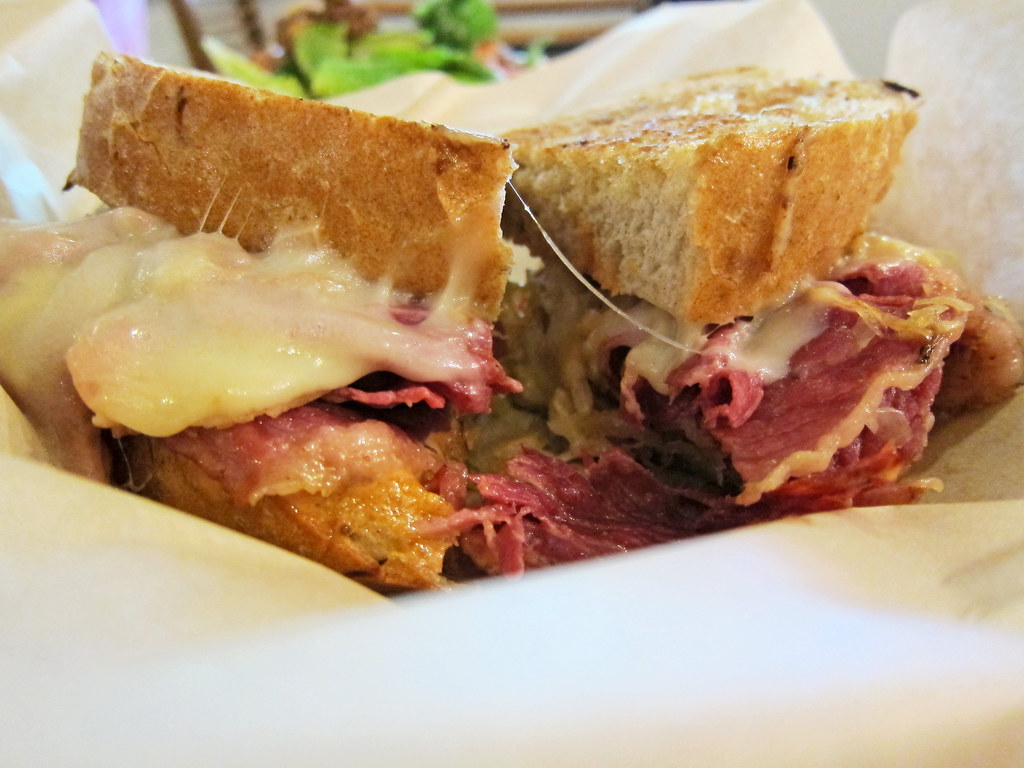
3. Reuben Sandwich at Leoda's Kitchen and Pie Shop (Lahaina). Maybe it was that we'd just spent the morning kayaking and snorkeling off the coast in Olowalu Village, and were starving. But in the moment, anyway, I've found few sandwiches as satisfying as the Reuben I had at Leoda's Kitchen, another place opened by Sheldon Simeon. Layers of shaved corned beef, oozy Swiss cheese, sauerkraut and thousand island dressing piled onto thickly sliced, griddled rye bread - what's not to like? The single-serve macnut-chocolate praline pie was a winner too.

Leoda's Kitchen and Pie Shop
820 Olowalu Village Road, Lahaina Maui
808.662.3600

Leoda's Kitchen and Pie Shop on Urbanspoon


4. Shave Ice at Ululani's Hawaiian Shave Ice (Lahaina). You can get shave ice all over the islands - and we did - but the best we had was at Ululani's Shave Ice in downtown Lahaina. Unlike the typical, treacly day-glo syrups that look and taste like nothing from the natural world, Ululani's flavors its powdery, freshly shaved ice with all natural syrups made in-house, many from the plethora of tropical fruits that are available locally. Little Miss F opted here for green tea and lychee. I was partial to mango with li hing mui powder (salted dried plum), which became something of an obsession for me during our time in Hawaii.[2]

Ululani's Hawaiian Shave Ice
790 Front St., Lahaina Maui
360.606.2745

Ululani's Hawaiian Shave Ice on Urbanspoon

(continued ...)
Saturday, May 18, 2013

Turns of Phrase

So much food writing is actually dreadfully repetitive. There are only so many ways to describe a cooked piece of meat, only so many synonyms for "delicious" (though there are a potentially infinite variety of ways to describe a terrible dining experience; it's like a variation on the Tolstoy quote: "Great meals are all alike; every lousy meal is lousy in its own way."). Still, often when I read a  good review, there is a sentence, a phrase, a description that resonates; it captures the ear, the mind, the appetite, maybe even all three.

With talented, dedicated, gainfully employed restaurant critics becoming an increasingly scarce commodity (yesterday Robert Sietsema of the Village Voice was "shit-canned," to use his own words; in the past month or so Michael Nagrant of the Chicago Sun Times and Hanna Raskin of Seattle Weekly were let go; locally, Miami New Times let Lee Klein go last year), I'm increasingly grateful for those who still provide a unique, perceptive, captivating voice.

Here are a few turns of phrase that recently caught my attention:

"This is food at its simplest and most elegant, food that doesn't want to slap your face. This is food that is simply good, and defines a sort of normalcy in eating that no longer exists."

- Robert Sietsema on the diner burger, in his last post at Village Voice.

"Two Guys Walk Into a Bar ..." (just this whole damn piece, as good an ode to Sietsema as there could possibly be, by none other than ...)

- Jonathan Gold in LA Weekly.

"There isn't a plate he won't paint with limp berries or kumquats, smears of pastel-colored sauces, or nests of spun sugar—dishes that look as if they shot through a wormhole from 1993."

- Mike Sula on Vu Sua in Chicago Reader

"Caravaggio is defiantly elegant in an age that sees white tablecloths as a medieval relic whose sadistic power to stand in the way of a good time is second only to that of the chastity belt."

- Pete Wells on Caravaggio in the New York Times.

"For those who have yet to do so: eating these pigs was like seeing an old friend from high school who had lost a lot of weight and now dresses well. You can still recognize them; they are just better now."

- Joshua David Stein on the "pigs in a blanket" at Alder in New York Observer.

"The Caesar salad, the golden retriever of restaurants (friendly, good with kids, dumb), is smartly redone as Caesar nigiri."

- Joshua David Stein again on Alder.

"You might get to thinking that DeLucie is a bit of a carpetbagger, who hasn’t rescued the memory of Bill’s so much as co-opted it—lopped off its balls and sold it back to you at a staggering markup."

- Jordana Rothman on Bill's Food & Drink in Time Out New York (Rothman, the TONY food and drinks editor, is filling in as the restaurant critic on an interim basis after Jay Cheshes, who held the post for five years, recently left).

Monday, May 6, 2013

Cobaya Macchialina with Chef Michael Pirolo


Too often, I feel about Italian food the way I feel about handjobs: even when it's done well, it's satisfying but rarely very exciting; and when it's done poorly, I may as well do it myself.

After our Cobaya dinner at Macchialina, perhaps I should reconsider (about Italian food; not handjobs). Macchialina is the fourth restaurant opened by the Pubbelly boys, and to head this one up they poached Chef Michael Pirolo from Scarpetta in the Fontainebleau, where he had been chef de cuisine. Chef Pirolo put together a dinner for us that was hearty and satisfying, but also showed off a real range of flavors and techniques, classical in inspiration but contemporary in style.


(You can see all my pictures in this Cobaya Macchialina flickr set.)

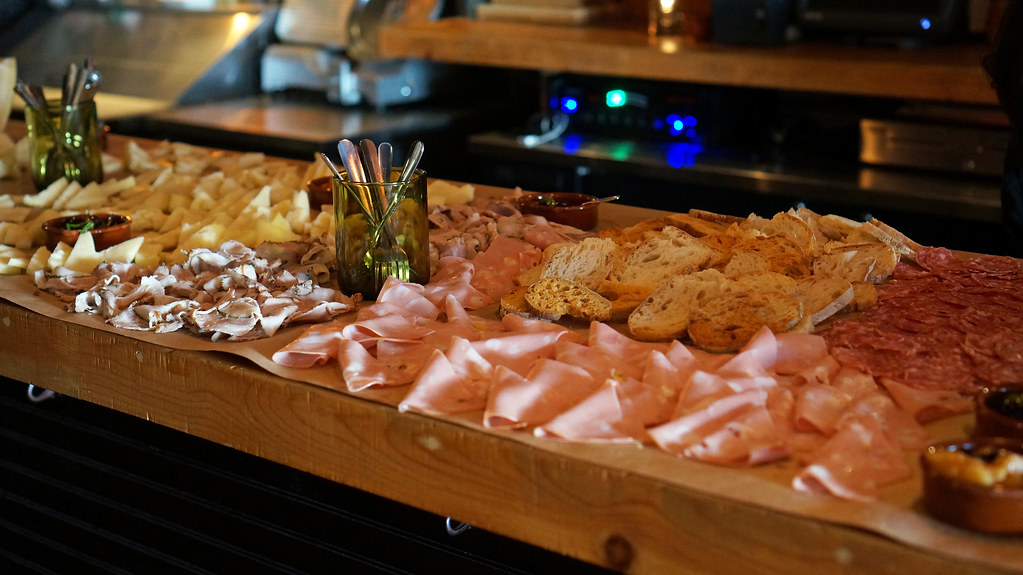
We entered the restaurant to find the long bar counter completely blanketed in the finest meats and cheeses of the land: parmigiano reggiano in rough chunks, waves upon waves of prosciutto, mortadella, salami, and best of all, Macchialina's house-made porchetta, served in thinly sliced, fat-laced ribbons. As guests arrived, GM and wine director Jennifer Chaefsky offered glasses of Baldini Lambrusco dell'Emilia, a refreshing sparkling Lambrusco that was perfect with the salumi (yes, Lambrusco is back).


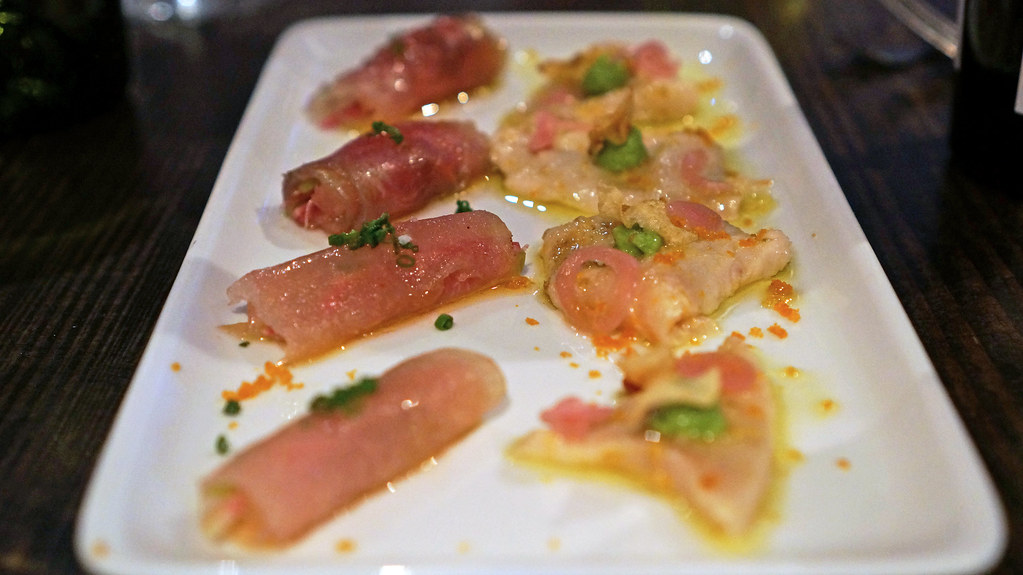
The meal followed a classical Italian progression: antipasti, pasta as a "primi piatti," followed by a hearty "secondo piatto," mostly served family style. First up, a couple of crudo-style cured fish items:[1] tuna, cured like prosciutto, wrapped around compressed melon; and swordfish, cured with citrus zests, topped with a dab of a bright green dill purée, and finished with shavings of bottarga.


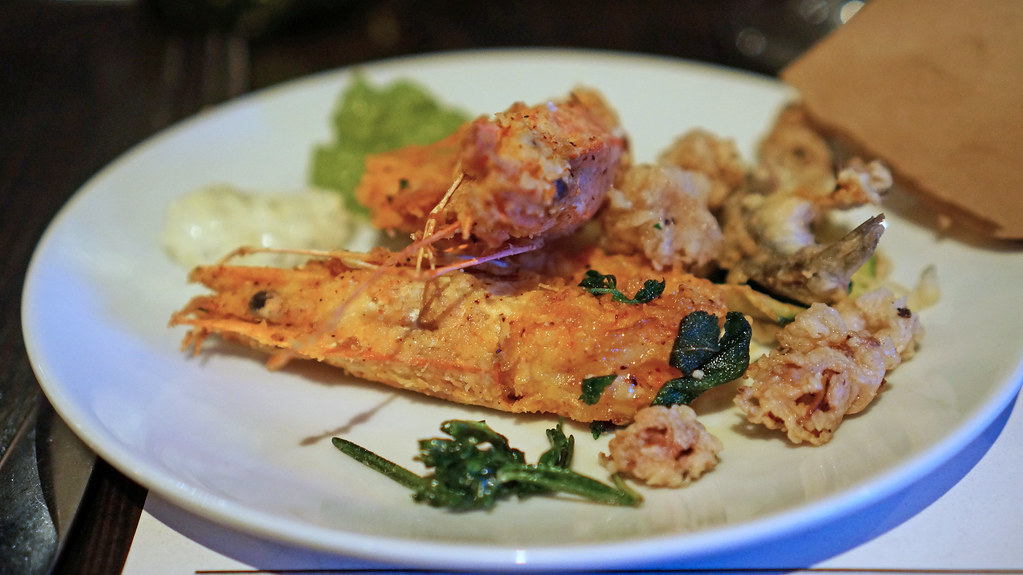
For the next round, a fritto misto of seafood, each diner was handed a paper cone, stuffed with fried shrimp, calamaretti, whitebait, baby eels and anchovies. Delicate and crisp, the real standouts here were the gorgeous head-on shrimp - though all were good, especially after being dragged through the anchovy-infused salsa verde offered alongside. To accompany, Jennifer poured the Vietti Roero Arneis, a crisp, floral white from one of my favorite Italian producers, better known for their Barolos.

(continued ...)

Saturday, May 4, 2013

Miami Gets Cruxed - Chef Brandon Baltzley, 5/19/13 & 5/20/13 - UPDATED


If you're on the Cobaya mailing list, then you may have been at, or heard about, our dinner with chef Brandon Baltzley (former sludge metal drummer and Chicago cooking wunderkind, mastermind of the Crux itinerant pop-up restaurant / culinary collective, author, and soon-to-be chef and farmer at TMIP) back in December. If not, you can read about it here:
"Cobaya Gets Cruxed"

Well, he's coming back in town as part of a "farewell tour" for his Crux series of collaborative dinners before diving full bore into his next project, a farm/restaurant in northern Indiana.

And you've got two different chances to be a part of it this time.

(1) On Sunday May 19, Brandon will be collaborating with Chef Jeremiah Bullfrog for a podBrunch at GAB Studio in Wynwood - 5 courses for $35, running from 12pm-3pm. You can get tickets here.

(2) On Monday May 20, Brandon will be collaborating with Chef Jamie DeRosa for a blow-out dinner at DeRosa's new restaurant, Tongue & Cheek, on South Beach. One seating, 7:30pm, $125 per person (inclusive of tax & tip). To get seats, use the PayPal link below - first come, first served! To request spots, please email miamichowdown@gmail.com - purchase details will be available by Tuesday. Please note how many spots you're requesting in your email.

Come get Cruxed.

GET YOUR SEATS FOR "TONGUE & CRUX" DINNER:


How many seats?